

Sponsor shout out!
Are you a therapist looking to organize your business? Try SimplePractice! Start with a seven-day free trial, then get 50% off your first three months.
Just go to https://www.simplepractice.com/ to claim the offer!
Summary
Curiosity heals faster than control. That’s the thread we follow with Lynette Danylchuk, PhD—trailblazing psychologist, past ISSTD president, and coauthor of Treating Complex Trauma and Dissociation. We talk about why the field has exploded with research and lived-experience leadership, and how the best therapy now balances sturdy containers with deep listening. Tools matter, but timing, consent, and relationship matter more. When we lead with humility, the psyche reveals its own map.
We get honest about clinician burnout and how to refill the well with beauty, community, and expressive arts. Long exhale singing, a moonlit walk, laughter with a trusted friend—these aren’t luxuries; they’re nervous system care. Lynette reframes dissociation as creativity under pressure, showing how fierce protectors once patterned after harm can be reclaimed in service of dignity. Integration becomes alignment: every self-state moving with the values the person chooses, not the rules of past abuse.
We also zoom out to collective trauma. React or respond? That choice shapes movements and mental health alike. Using anger as fuel for care keeps the frontal cortex online and harm in check. We talk intergenerational resilience, asking about ancestors to find the strengths that carried families through. For those seeking help, we share practical routes—referrals, skill-building programs, and the persistence it takes to find a good fit. And for a culture that long blamed victims, we name the shift underway: more empathy, more protection for children, and more voices rising to end the silence.
If this conversation gives you a spark—share it with someone who needs language for what they’re feeling, subscribe for more grounded healing talks, and leave a review so others can find us. Tell us: what practice helps you respond, not react, this week?
Chapters
Guest Intro And Credentials
Sponsor: SimplePractice
Shifts In Trauma And Dissociation Field
Lived Experience And Breaking The Glass Ceiling
Structure Versus Imposed Protocols
Tools, Humility, And Therapeutic Fit
Clinician Burnout And Feeding The Soul
Intergenerational Resilience And Ancestors
React Or Respond: Collective Trauma
Inner Systems, Fierce Protectors, And Alignment
Be Curious, Not Judgmental
Community, Art, Music, And Joy
Finding Care For Dissociation
Shame, Empathy, And Protecting Children
Breaking Silence And Building Caring Systems
Transcript
Lisa Danylchuk: 0:03
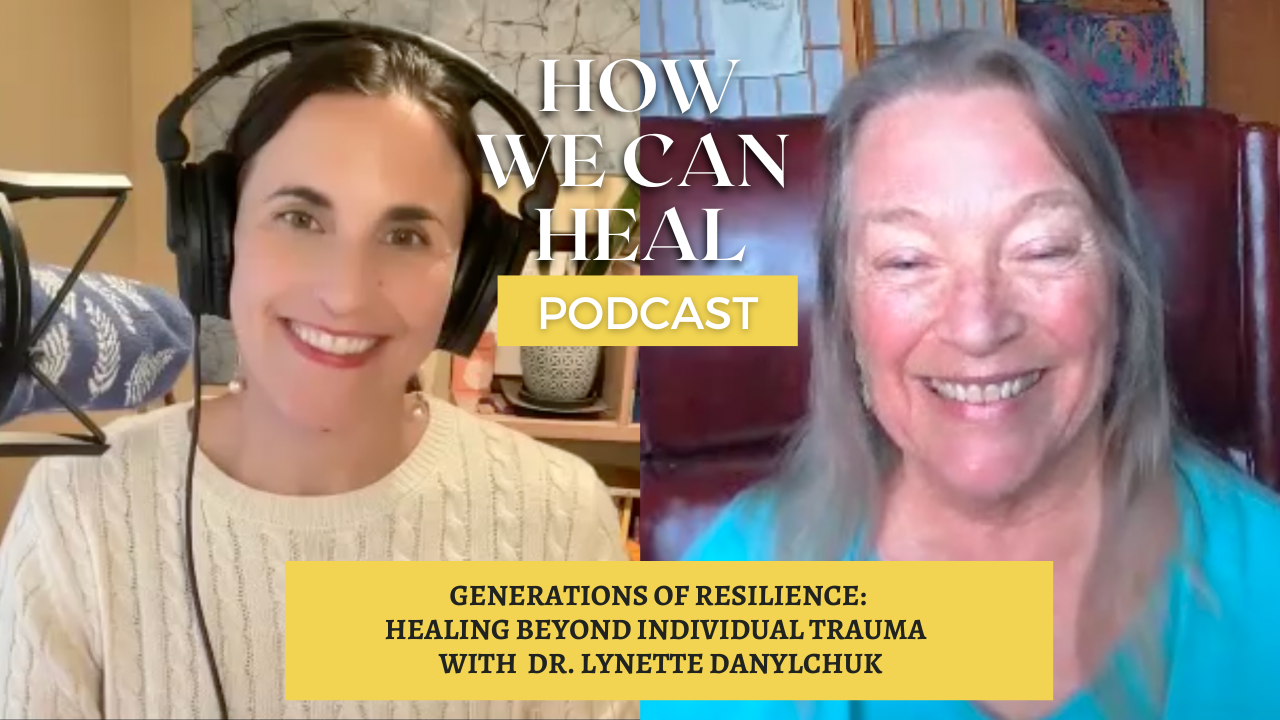
Welcome back to the How We Can Heal podcast. Today our guest is Lynette Danelchuk, my dear mama. She's a PhD clinical psychologist and has worked in the field of trauma and dissociation for almost half a century. She's received the Lifetime Achievement Award from the International Society for the Study of Trauma and Dissociation, or ISSTD, and served as president of the organization in 2015. She's been retired from clinical practice for about a decade, but continues to teach and offer consultation to therapists around the world. She and Kevin Connors co-authored Treating Complex Trauma and Dissociation, a practical guide for navigating therapeutic challenges, which came out in 2016 with the second edition available since 2023. She came on the show in 2022 and dropped some serious knowledge. So if you haven't heard that episode yet, I encourage you to go back and listen. It's as relevant today as it was then, and we go even deeper today about personal and collective healing. I've always loved having time with her, and I'm thrilled to share this conversation with you here today. Please welcome Dr. Lynette Danelchuk to the show. As a therapist, I know the work doesn't end when a session does. The notes, scheduling, billing, and admin can quietly creep into what was supposed to be downtime. Before I started using simple practice, I used to log everything on paper, store it in my office, and try to keep track of what I needed to shred and when. When I made the switch to simple practice, it made my whole business feel lighter, which is why I want to share it with you today. Simple practice is an all-in-one electronic health record that's HIPAA compliant, high trust certified, and built specifically for therapists. It brings scheduling, billing, insurance, and client communication all into one place so you're not juggling multiple systems just to run your practice. Automated appointment reminders help reduce no-shows, and customizable note templates make documentation faster and less draining. So the business side of your practice feels lighter. If you're just starting out or growing your practice, there's also credentialing service that takes the headache out of insurance enrollment, which honestly can be a huge lift. The best part is they're always adding new features to make the business backend run with more ease. If you're ready to simplify the business side of your practice, now's the perfect time to try simple practice. Do it with me. Start with a seven-day free trial, then get 50% off your first three months. Just go to simplepractice.com to claim the offer. Again, that's simplepractice.com. I'm so happy to be here again. So we last recorded an episode in 2022, and since then you've updated your book, came out with a new edition, been teaching, consulting, has the world's been processing a lot of things. So I'm curious what themes or trends you've been seeing in the field of trauma and dissociation in recent years?SPEAKER_00: 3:15
It's been really interesting because in the beginning there was almost nothing, even in the professional literature. And now there has been an explosion of all kinds of information studies, neurological studies, research studies, and the people with the lived experience are showing up and sharing their experiences. So the field has changed enormously and will continue to change. And I think this is incredibly healthy. There have always been people with lived experience in the field. They hesitated saying that they had lived experience because they were not usually accepted. People would think, though, if you have it, then you can't do this. Which I always thought was really rather odd because if we think about a child who had a heart problem and they were saved by a heart surgery, and they grew up and they became a cardiologist, and everybody goes, Wow, that's phenomenal. But if somebody's been horrifically abused in the dissociative, and they come through a process and they get a whole lot of healing, and they enter into the field of working with people who've been highly traumatized, there seems to be a problem with that. Yeah. Um I think there is in or has been in the field a kind of glass ceiling that the professionals were not, you know, having to do with all these things. They were normal, terrible term. We'll call it apparently normal. Apparently normal. Maybe sometimes. So but there was this there's this illusion that the person at the top, so to speak, with the doctorate and the degree and the license and all that had it all together. Yeah. And we in the field know that has never been true.Lisa Danylchuk: 5:12
Yeah. We're all human, right? Whatever, even if we didn't have no one has the same experience in their background, but even if we don't share the experience of a specific client we're serving, we're still very human and we have our history.SPEAKER_00: 5:26
Absolutely. And that is always been sort of a don't bring it with you, or you have to separate yourself from it. Rather than it's part of who you are as a human being. Do you know it? Do you know how it manifests in your relationships? Are you able to work with it in a way that is healthy for you and other people? And then everything that you've been through can become an asset in how you work with other people because you are more of a whole human being. Yes. You're far more conscious and aware of all the things that go on inside of you. And if that's okay with you being with yourself in that kind of open way, you're gonna be far more open with somebody else.SPEAKER_02: 6:11
Yeah.SPEAKER_00: 6:12
They start talking about what's going on inside, and you're going, uh-huh. Uh-huh. And you can kind of track along with them about what they're saying, because you've taken a journey through your own psyche, and you know there's many different ways that you can be, and so you're far more comfortable hearing what other people are saying, and much less of a need to control. Yes. Because my feeling is a person's psyche has its own map of healing.SPEAKER_02: 6:43
Yeah.SPEAKER_00: 6:44
And the person needs to connect up with that themselves, and the therapist's job is to help them connect up with their psyche's path to healing and not impose it on them from the outside. That's just more of the same kind of conditioning programming things.Lisa Danylchuk: 7:04
Yeah, or having to someone feeling like they're trying to be fit into a mold. I mean, we can crave structure, and structure can be healthy to a point. If it becomes too rigid, it starts to become unhealthy. If it becomes too chaotic, then where are we going? What are we doing? But having a structure is helpful, but an imposed structure that maybe doesn't match is not going to be helpful.SPEAKER_00: 7:27
Yes, definitely. Because the structure is kind of a container that makes it safe for the person can to do their process.SPEAKER_02: 7:36
Yeah.SPEAKER_00: 7:37
So it's not meant to put them in a little thing and push them down the pre-designed path.SPEAKER_02: 7:44
Yeah.SPEAKER_00: 7:44
And that's how you manufacture products. It's not how you help a person.Lisa Danylchuk: 7:48
Right, which can go directly against what we try to do with research, which is we try to put things into containers that are replicable, right? So everyone gets the same treatment and there's no difference, and it's it's manualized and it's measurable. And I feel like there are some people who are doing that in ways that are is are savvy and responsive, but it takes extra work to do that.SPEAKER_00: 8:15
It takes a lot of work because all of those things, like we have such an amazing amount of tools now in this field. There used to be none, and now you get overwhelmed with all the things that you can learn and that can be helpful. And the temptation, I've heard people's therapists say this, is that when they had all their certificates from all these places, they felt that now they could really help their client and it gave them confidence, which is great.SPEAKER_01: 8:42
Yeah.SPEAKER_00: 8:43
The thing is, if they take the next step, they'll take that whole box full of tools and put it right there, and they'll show up with the person and try to the best of their ability to make a genuine connection to this person to see and to be with them to discover who they are. Because you're they're discovering who they are, you're discovering them alongside the client. You know, you're doing the same kind of process. And as you're doing that, it's been so true for so many people. As you're doing that, this uh technique comes to mind. You intuitively just drop it in there and it goes beautifully. Yeah. As compared to I've done this, being in just think this this thing is so great that you have these techniques and you looking for a place to use it. And you grab the first place you can to use it, and it blows up in your face.Lisa Danylchuk: 9:41
It's so funny because I've done that. I mean, I think earlier in my private practice years, I would until I noticed my pattern, right? My pattern of like go to a training, be super excited, come back, tell my clients about it, be like, this is so amazing. It's gonna be great for you. And then after maybe three or four rounds of that, I started to see all my clients' faces like, oh, okay, yeah, yeah, we'll do this for a session or two, but then we're gonna go back to the way that I like to work. Like, oh, Lisa's excited, sure, I'll try. Thanks. Like, okay, now we have that tool and we've practiced it. Cool. And there was a purpose in it of now they've been introduced to the tool, they know I have it, they know I'm excited about it, trained in it. We can pluck it out of the box together, right? They can also be like, oh, I could really do some hypnosis around this, or oh, I'd like to do some EMDR, or I feel like I need more neural feedback. Like they can do that because they've had a taste. But I think it was important that I picked up on, oh, you don't like you're not you're just going along with this for me because we have a long relationship now and you trust me as your therapist, but you don't actually, it's not actually what you need right now.SPEAKER_00: 10:49
Exactly. And it takes the experience of watching yourself do something and realize why am I doing this? I think this is more about me and what I want and need than what the client actually needs. And you go, okay, you need a lot of humility in this profession. Yes, yeah. You really do, especially I think in this part of the profession, which is so new that all of us are out there doing things that we weren't necessarily deeply trained to do, but we picked up along the way, or we've just learned, or we're just trying for the first time. We're with clients that may know a lot by now, because it's information, may know nothing. You have to really take it one step at a time and know that you're not going to do a perfect job. Every once in a while you'll have these wonderful little moments, go, wow, that was awesome. And everybody goes, Yeah, we did it. But the process is humbling in that it does take time. It takes time for people to face things and confront things and deal with it and process it and integrate it into their life, however, they do. It takes a lot of time.Lisa Danylchuk: 12:00
Yeah. I have two questions kind of forking from that. And one of them is you've supervised people, done consultation with folks over long periods of time. And up until recently, you're retired, but you still work with people and support folks. I mean, you're like retired in quotes. Like, what's your Tuesday like? Oh, it's booked. I'm like, But I'm wondering what you're seeing in the people that are looking to you for support, in the clinicians and the folks who are serving other people. Are you seeing any patterns there or common challenges that come up in this work in complex trauma?SPEAKER_00: 12:39
What a lot of people are more aware of and are dealing with is the impact of working with this, with people, highly traumatized people, on themselves.SPEAKER_03: 12:49
Yeah.SPEAKER_00: 12:50
And how incredibly draining it can be mentally, emotionally, physically, spiritually, the whole thing. And how that, in a sense, there's a reality too, they're getting a sense of the unending endurance and things that people have in their office have been living with, and getting a sense of how endless it feels, and they really need to do something to step aside and you know, feed their soul. I was talking to somebody today about where's the beauty in your life? Where is the beauty? How much can you look out and see something? How much can you engage with a little child or go out to the garden or walk in the trees or do something that connects you with beauty because beauty feeds the soul. Oh, yeah. And you know, webinar I did last week, psychology means study of soul, but we're not supposed to talk about soul. Right. But but it's it's at the center of everything is this being that we're working with who is very much trying to heal from incredible darkness and find some light in their life and some joy and some genuine connection.SPEAKER_02: 14:12
Yeah.SPEAKER_00: 14:13
And they really have to start not from the starting line, but from having been thrown way the heck back with horrendous experiences. And I I am so blown away with the courage of the people that end up in therapy.Lisa Danylchuk: 14:28
Oh, and the capacity.SPEAKER_00: 14:29
The other thing has come up really recently. Yeah, has just written a book on intergenerational transmission of resilience. Yes. And that's been coming up. That yes, we know with the generations of the trauma comes down, the generation. Well, so does the resilience.Lisa Danylchuk: 14:50
I know there are students listening who've been through my Yoga for Trauma online training program who are cheering along with me because I literally would have us like chant at the end of the lecture on intergenerational trauma, intergenerational resilience. Like, we can't forget that. We don't want to ignore the trauma, we don't want to avoid the trauma, but we don't want to be rooted in it. We want to also know that there's this immense capacity that has been passed down, even in the capacity to dissociate and get through things. Like there is this incredible capacity to cope and move through. And sometimes people define trauma as like overwhelming your capacity to cope. And I'm like, I don't know. Maybe it just gave you a new different way to cope that you weren't using before the trauma, right? And then that becomes something that you're working with or working through.SPEAKER_00: 15:35
And I've been starting to think about, and other people are too. We get a history of our people when we work with them, we're trying to look for what their family constellation was, et cetera, et cetera. But to begin asking about their ancestors.SPEAKER_02: 15:48
Yes.SPEAKER_00: 15:49
Because so often the resilience is coming through their ancestors. There's a line up there, and they may even have always identified with that line of their family, although they never told anybody, but they've always had a kind of a feeling of kinship, a deeper, stronger feeling of kinship with one element of their family tree. And if you look at that, you look at now why do you identify with this part of your family tree? Well, they did da-da-da-da-da-da. And they're talking about resilience. They're talking about some part, something that their ancestors did or lived through or overcame that stood out for them and they have it. Yeah. They have it.Lisa Danylchuk: 16:31
Yeah, they resonate with it. So this is a good time to pick up the second question, which is more focused on collective trauma. You know, we're in a collective process, probably throughout the world, in the United States, of seeing things that have been obvious but behind a veil, right? Dissociated from our normal everyday conversation that are now entering our normal everyday conversation. Racism, classism, all the isms, I think people are becoming more aware of. So what have you seen help people reassociate in this way, or even access their intergenerational resilience, or access their own resilience in facing some of these really pervasive, really challenging things in everyday life?SPEAKER_00: 17:23
I think what people are discovering is that they have a choice to react or respond. And they're being, you know, people are trying to get them to react. And if they react, they are just like the other side. However, if they feel the reaction and they choose not to behave like that, but to respond in a way that will work better, they are evolutionarily on a higher step. And I'm thinking that this whole thing is a crisis point for humanity because humanity is not in harmony with nature or the earth or itself. And there's something fundamentally wrong when people try to get accumulated wealth or power at the expense of other people and our planet. Not in the service of at the expense of this, this is what I call stage four capitalism. You know, it's lethal. Yeah, it will destroy the whole system. And so people are showing up with an incredible capacity to withstand violence and not react. And respond, respond, respond in larger and larger and larger numbers and not become reactive. And it's showing up the negative reactivity of the other side more and more clearly, and they're becoming more and more desperate. So we need to do more and more of the peaceful protesting, legal avenues and things like that that are respectful of human beings.SPEAKER_02: 19:12
Yeah.SPEAKER_00: 19:13
I think Donna Hicks' thing on dignity is right there at the bottom of all of this.Lisa Danylchuk: 19:18
Yep, had her on the podcast twice for that reason. Right? Like, Donna, come back, keep talking to us. We need this.SPEAKER_00: 19:24
It's profound. Yeah, it is so central. And I think just being aware of that helps people not be reactive.SPEAKER_02: 19:31
Yeah.SPEAKER_00: 19:32
Because this person's out of control. This person is really dangerous. And we need to contain them. But we're we're containing a human being who is currently out of control and dangerous. We don't know why. I keep fantasy that goes in my head is to walk up to an ICE agent and say, tell me about the first time you saw your dad hit your mother.SPEAKER_02: 19:54
Oh wow.SPEAKER_00: 19:57
Because I can't help but think that most, if you know, a lot, or maybe most of those guys came out of a domestic violence background. Interesting. Because that's how they're behaving.Lisa Danylchuk: 20:09
Interesting. Yeah. Yeah. And when you have training in certain dynamics, it's easier to see them. And that can help sometimes with responding or reacting. But also one thing I'm thinking of a lot as you're talking is just the awareness of our nervous system that has come through psychotherapy and trauma research. And sometimes we'll call it like, oh, this person's behaving in love or in hate. Even in religions, you can see that language. I think in nervous system, we'll look at like threat or defense or connection, as opposed to because you're saying like the two sides, and I'm hearing these a side that's act acting humanely or is in love and connection, another group or side that is in defense, best defense. I've said this before here is a good offense. And so thinking of also along those lines, harm and care is another way that I think of it. What's harmful and what's caring, and what's doing damage and what's restorative. And when you say react versus respond, well, when we react, even if our nervous system is very rightfully in fight, then harm can be done from that, right? Activism can be done from that, protest can be done from that, walking can be done from that, but harm can also be done if we're in a really strong fight response. So you're asking people to know themselves and their system well enough to people will say, like channel the energy, right? But act in a way that is rooted in love or care or connection, right? If we can get to that place of like, what am I upset about? I'm upset because somebody I love got hurt or is being mistreated. I care. This energy is coming from me caring a lot. So let me go express that. Even if it's fiercely expressing that. You know, my friend Melanie, who's come on the show, a yoga teacher and author, talks about fierce kindness, right? Sometimes boundaries need to be loud, need to be very line in the sand, need to be spelled out and cited. But we can do that. We can care and we can use whatever our reaction is to harness that care.SPEAKER_00: 22:23
Yes. And it's profound when people do that because they have their whole being is now activated. They have their whole defense thing, their whole nervous system, fight, flight, and all those things are there. And the frontal cortex is still online. And they get to choose what they do with that energy. They get to channel it in a way that they feel will be most helpful for the situation. So that energy is no longer out of control, reactive. It is being channeled into responses that are actually in line with what the person is trying to do and bringing more justice and care and concern into the world rather than become part of the problem. As justified as they may feel, it becomes part of the problem.Lisa Danylchuk: 23:17
Yeah. And it's interesting to note how inner workings, working with someone with, say, dissociative identity disorder and seeing patterns and relationships, how they work there and looking at more outer workings out in society. But it sounds like this is one of the things that responding versus reacting, is there anything else that comes to mind that you've learned from the inner workings that you feel like apply outside?SPEAKER_00: 23:43
It's really interesting, but when working with somebody who has many different self-states, many different ways of being, they're plural. There's a whole group in there. Everybody in that system, every self-state is helping, no matter how they come across, no matter, you know, if you think that they are the spiritual one, therefore they're helping. Yeah, but so is the one that can mouth off really alarmingly. Yes. That one is also helping. The presence of the real fierce protectors are what allow the person to also keep the innocence alive.SPEAKER_02: 24:21
Yes.SPEAKER_00: 24:22
So it's how that works in their system, it's patterned after abusers, but it doesn't have to continue to be patterned after the abusers. They can say, This is my fierce self-protective energy. I'm going to claim it as my fierce, self-protective, frontline defense people, and support them in protecting me in a way that is congruent with who I am as a human being. See, the healing allows the person to get all of their self-states in alignment with who they genuinely want and feel they can be and need to be and are, how they really, who they really are. It's a long process. And I don't think, you know, I think people who are in have dissociation and confront it directly with self-states are clearer about it than most of the rest of us, who have ego states that aren't as easily defined, and so they can influence us much more subtly.Lisa Danylchuk: 25:28
Yeah, interesting, right?SPEAKER_00: 25:29
So yeah, I've learned a lot from the people. And I think to myself, well, if those things have happened to me, what would my fierce parts be like and wounded parts? And what kind of constellation would I have inside if I survived? I always wonder if I would have survived what they survived.Lisa Danylchuk: 25:49
Yeah.SPEAKER_00: 25:49
So hats off to survival.Lisa Danylchuk: 25:52
Yeah. What do you wish everyone knew about trauma and dissociation? Like if you could pull some of the wisdom you've gained from working with people who have survived, what do you wish the general public just had knowledge of solid understanding of going into anything, their own lives, let alone current events?SPEAKER_00: 26:15
I would like them to be really curious. And I'm now flashing on lasso. People make judgments, they're not curious. Ted Lasso.Lisa Danylchuk: 26:23
Yes, be curious, not judgmental. Season four coming soon, I believe. I hope.SPEAKER_00: 26:28
Good with the dartboard and the whole thing. Go look at that one again, folks. But the thing is, people when they think hear about dissociation stuff, they automatically have a preconceived idea of what it is. And the reality is, is which person with a dissociative identity response are you talking about? Yeah. Because there may be some commonalities of experiences which they're now sharing with each other to see what's similar, what's different between different people with dissociative things going on. But each person has their system designed to meet their needs as they grew up in the context of their life. And no two people are alike. So to be curious about the person in front of you and what it's like for them, rather than assume because you read something or heard somebody else talk that you know.SPEAKER_02: 27:24
Yeah.SPEAKER_00: 27:25
Because you don't.Lisa Danylchuk: 27:27
Yeah. I think it's one of the best things is just that openness, right? Being able to be open and receptive and listen. And that's something that can seem so simple, but can even get lost when we think we know. I saw a quote the other day in the beginner's mind, there are endless opportunities, in the experts, there are few. And I was thinking, no, no, in the experts, there are infinite, you know. The expert needs to be certain about things until they're uncertain about everything in this line of work, at least.SPEAKER_00: 28:00
I mean, maybe not in aeronautical engineering, but no, but in this with machines, maybe yes, but with humans, no, because the thing is when I think back on how I got into the field knowing nothing, that was an advantage.Lisa Danylchuk: 28:14
Yeah.SPEAKER_00: 28:15
Because I listened so intently. And knowing a whole lot and having a lot of tools is another kind of advantage. But you have to keep that openness that yes, now we have so much more information, so many more tools. But who is this person right in front of you? This unique human being's never been before, will never be again. Yeah. What I love that's happening in this society is the diversity, and you're talking about the others othering everybody, and we're trying to get out of othering everybody. Well, the reality is every human being is unique and special and different. Our thumbprints are different, our brain prints are probably really different. And so, you know, to start looking at variety and diversity as an asset, that the more variety we have, the more we have creative ideas and talents and skills that can be contributing to the whole human race and the world, the planet.SPEAKER_02: 29:16
Yeah.SPEAKER_00: 29:17
Becoming a lot healthier. You know, because everybody brings something, a new, unique way of seeing or experiencing what a wealth that we could tap into. Yeah. You won't get a degree from a university for that necessarily, but that's only one way to get knowledge.Lisa Danylchuk: 29:40
Thinking of diversity as wealth, I'd love to see like tracks probably across countries if we're more inclusive and collectively educated, like we just harness more qi, right?SPEAKER_00: 29:54
Yeah, and I'd love to see talk about dreamstorming thing, a repository of all the wisdom people have gained, indigenous tribes, all kinds of different populations, about healing trauma. Yes, yes. We've been healing trauma ever since we've been. Yeah. And every culture has their way of doing it. And I I would I would guess that there's a lot of common threads through all of that.Lisa Danylchuk: 30:18
What would you say to someone who's listening? And I know because I get notes from folks who, you know, are looking for treatment or are looking for consultation, different things. So, what would you say to someone who's listening and learning about dissociation through this podcast, other things online, who's actually looking for treatment, they haven't found a therapist for them yet. What would you say to them? Have a lot of patience.SPEAKER_00: 30:42
I would go to the ISSTD website and look at find a therapist and start there. And that gives a few names in different areas almost everywhere. And quite often, maybe there's an opening, maybe there's a not. But whenever anybody contacts a potential therapist and it's not going to work for any reason, ask the person for more names. Yeah. Because people have colleagues that you know don't necessarily show up on those lists. And people who work with dissociation quite often have full schedules, so they don't advertise. However, if you keep asking about each per from each person, who do you think might have an opening, and you track it down, you will find someone. Meanwhile, there's a lot of things that people can read about. They can do finding solid ground, Bethany Brown's program to learn about it that's online. There's so much more that's available online and in written work that can fill in this is what it is, and this is how it manifests in a lot of people. And these are the things that typically people have to learn or need to know. And they can really educate themselves pretty well so they can do much more of that on their own than they used to be able to.SPEAKER_02: 32:05
Yeah.SPEAKER_00: 32:07
Patience, a lot of patience.Lisa Danylchuk: 32:09
It's so funny. You talked about intergenerational resilience earlier. And I think I told you about this time. It was about a year ago. I was passing by the Grand Canyon, so went to go, you know, look over the edge for a moment. And there was a native woman there selling jewelry, and she had nine kids. Her youngest was, I think, seven weeks old on her body. And the other ones are just like running around, and we're like 30 feet from the edge of the Grand Canyon. They're just climbing trees and playing with each other and making up games and all this stuff. It was so beautiful. And I couldn't believe, I mean, I got you a pair of earrings from her, right? Because I was like, I gotta wow how support this small business, woman-owned, native-owned small business. But I couldn't believe she was like on her feet seven weeks out and just and having one child myself. It's like, how do you do it? You like, I must know your secret. And her response was patience. I was like, What have you learned from raising this many kids? Tell me the way. And she just said, Patience. I was like, Yeah, right. Which can be really hard to hear if you're someone that's looking for treatment or if you've like, I know looking for a therapist can feel like dating and people who've been dating a long time too, and not finding someone, it just gets demoralizing, right? But I think the reminder that it is worth taking a beat, coming back, continuing to try and having patience in the process of finding someone, like that, that is, I think, gold right there. And I know there's folks I've been working with for a number of years that, you know, had their own journey in finding me or found found me through someone who did exactly what you said, and said, Oh, maybe Lisa has some space. And you know, I wasn't advertising, but they found their way.SPEAKER_00: 33:54
Yeah, it's amazing when people are genuinely looking. I had one gal who was in the hospital after a serious suicide attempt, and her therapist came in and he said because she broke the contract to not commit suicide that he dumped her right there. So she had to get a therapist before they let her out of the hospital. They're gonna put her in conservatives. So she found me. I have no website, I was not listed anywhere. She found me, and I'm thinking, wow. You found me from I was so friggin' impressed. Of course, I'll take you. Yeah, I'd be honored. I would be honored to take you. And yes, I'll sign up as the insurance that you need. I'll take you. Yeah, that was it was just so impressive. And you know, people do take a long time to find somebody because they're not that many that are trained. This is true. And you also have to find someone that you're a good match with. I tell people, don't take on a client that you don't like or know that you're going to like.SPEAKER_02: 35:00
Yeah.SPEAKER_00: 35:01
If you don't intuitively go, oh, I like this person, or I'm going to really like this person, then you're not the right person for them. You know, that connection, you meet somebody, oh, yeah.Lisa Danylchuk: 35:12
Mm-hmm. Mm-hmm. It's great too, because that is, in a sense, effortless. And you're talking about clinicians who you're supporting feeling the weight or the burden of the histories of trauma. Like if we're recentering ourselves or keeping a connection to resilience, and we're just going on that principle of, I just really like this person, or I just feel drawn to support them, or I feel some sort of connection here, that can hold so much and can provide so much on both sides, right? It can provide like vicarious resilience. It can provide um a genuine sense of being heard or seen or valued, like these things that you really can't download into a protocol or boil down into a behavior, right?SPEAKER_00: 35:59
Yeah. I mean, the thing is if you have that genuine feeling towards somebody, they will pick it up. Oh, yeah. And then they'll try to convince you not to like them at some point. At some point.Lisa Danylchuk: 36:12
So what would you say to someone, maybe a clinician that's having a hard time, like middle stages of treatment that can be, especially for folks who are in therapy for decades, you've been you've provided therapy and consultation now for like almost 50 years. So you've got half a century's experience worth. What would you say to someone who feels like they're in a middle ground that feels sticky, feels difficult, feels challenging?SPEAKER_00: 36:36
Yeah, that's actually a very productive place to be. I mean, you're in there, you're mucking it up. But there, you know, I keep thinking of the people that I've worked with as human works of art, and art takes a while to process, and you think about art projects and they're a mess in the middle.SPEAKER_02: 36:58
Yes.SPEAKER_00: 36:58
But you know, even Michelangelo's David was a bunch of dust and chips and crap all over the floor, and he kept at it.Lisa Danylchuk: 37:08
Yeah.SPEAKER_00: 37:09
And I think with these people, they're dropping some really awful stuff off of them one way or another, picking it up, expressing it, dropping it out. It's it can get really, really messy. And if you say it's messy when you're in the middle of transforming something, it gets really messy, and then you begin to feel the actual transformation that you are creating. And at that point, you that itself brings you hope.Lisa Danylchuk: 37:39
I mean, that brings me hope in a collective sense right now, just you saying that.SPEAKER_00: 37:43
Yeah. Yeah. It's what is the opportunity, the characters, Chinese characters is crisis and opportunity. That's it. Yeah. Comes out of the same thing. I mean, you have a chance. When the system is in lockstep, you can't impact it. You hit your head up against it and you drop down. But when the system is in chaos and breaking down with incredible opportunities for people who know how it could and should be to move in and start making that happen because that benefits everybody. So they're gonna pick up a lot of support along the way.SPEAKER_02: 38:22
Yeah.SPEAKER_00: 38:23
So the people who have that clarity and they have, I need to do this, and they do it, they will have people coming up alongside and helping really fast.SPEAKER_02: 38:36
Yeah.Lisa Danylchuk: 38:38
I was thinking about clinicians who are feeling the challenge of responding to their personal lives, their clients' challenges, the collective trauma. And a lot of people have talked, especially since COVID, about being in it with clients. Like I've had clients come to session in the last week that are talking about current events and how it's impacting them. And I see things and it impacts me too. And so it can end up feeling like, oh, that this is a lot. This is a big load. And I think even what you said about knowing that you're in the muck of it and that transformation is possible from there can help. And you also said earlier connecting to joy, right? A small child, or like I went for a full moon walk the other night. I just wanted to go for a hike all day. It kept getting later. And I was like, no, I'm going. I didn't even know it was a full moon. And I got out and I was like, whoa, I don't even need a light. I'm just, I'm gonna, I'm gonna go as far as I had planned to go. Doesn't matter, the sun went down, and it was this beautiful talk about soul fulfilling, like, oh, amazing experience. So things like that are helpful when we're feeling this collective weight. What what else? Anything else come to mind?SPEAKER_00: 39:47
Music, art, dance. The arts are the expressive arts are incredibly helpful, and you do not have to be good at it, folks. In quotes, good at it, right? Right. This is not a product we're talking about. If you want to write or draw, do a poem or a picture or sing a song or do anything, it's not a product you're going to sell. It's an expression, a human expression. And allowing yourself human expression like that is incredibly helpful. That's how we're created. There are handprints on the cave walls.unknown: 40:23
Yeah.SPEAKER_00: 40:23
Yeah, there are pictures.SPEAKER_02: 40:25
Yeah.SPEAKER_00: 40:26
Yeah. They're old things that obviously were drums or flutes. So we've evolved with the with art and music and dance and community as a resource to help us. And I, you know, community is huge. We are too isolated. And if we can find just a couple of other people to hang out with and just go quality over quantity, yeah. Yes. How are you doing? Not so good. Me neither, you know, and then take it from there. Yeah. Because the fact that you're sharing it with another human being lightens the load.SPEAKER_02: 41:07
Oh, yeah.SPEAKER_00: 41:08
And quite often, if you know these people, similar to these people really well, at some point you'll make each other laugh.Lisa Danylchuk: 41:15
Yeah.SPEAKER_00: 41:16
Which is incredibly helpful. But yeah, companionship, talk to people.Lisa Danylchuk: 41:21
Shout out to Catherine O'Hara, who just passed a few days ago because there I saw a quote from the actor that was saying, laughter is just the best medicine. And people asking, what role do you want to be remembered by? And her saying, Mother, parent? Like, I don't want to be remembered for being in home alone or shits creek. I want to be remembered for being this amazing parent and laughing with my kids.SPEAKER_00: 41:45
Yeah, that's how we really connect. I think that's a real, you know, that's a real heart connection where people are really enjoying whatever's going on, making each other laugh, lifting their spirits. I mean, it is just magical. It's wonderful.Lisa Danylchuk: 42:00
You also mentioned the arts and music, and we'll have Molly Mahoney on the podcast this season to talk about her song that she recently recorded and how music has she's a professionally trained opera singer and does therapeutic work with folks, but also just can share with us some of that inspiration that comes from and the healing and connection that can come with music.SPEAKER_00: 42:21
Yeah, and with music, the wonderful thing is you're doing long exhales. Everybody knows those are really good for you. You're doing long exhales with a melody that you really enjoy with lyrics that mean something to you. You have the whole thing.Lisa Danylchuk: 42:34
Oh yeah. Oh yeah. Shout out to Hannah Waddingham, too. Not that she's listening to the podcast, but she's on Ted Lasso as Rebecca, and she has a Christmas special that I mean it's February, and Isabella still wants to watch it every day. Isabella and I end up like singing spontaneously. We're walking into the house. I think it was earlier today or yesterday at the latest. We're walking into the house. No, it was this morning, and we both started singing the same line of one of the songs. It's the happiest season of all. And I just both spontaneously picked the same line and sang it at the same time. And we talk about moments of joy, you're just like, you can't create, you can't force that, right? Like it just happens.SPEAKER_00: 43:16
Yeah. But you have that experience and you have that shared experience, and you're connecting up with each other, and there it is. It's yeah, it's beautiful.Lisa Danylchuk: 43:25
It's everything. Yeah. So you we also mentioned finding solid ground. We'll have Bethany Brenn back on this season to talk about that. She's also presenting with the two of us at the ISS TD conference in Portland this spring at the end of March. I'm curious about people you would like to see cited more. So if folks listening are creating coursework or trying to look for new readings, what who are some authors that you just wish were New York Times bestsellers based on their trauma work?SPEAKER_00: 43:56
Besides Donna Hicks on dignity.Lisa Danylchuk: 44:00
Hicks dignity. Yeah, Bethany Brand.unknown: 44:03
Yeah.SPEAKER_00: 44:05
You have your book. Yeah, that's right. You have Jennifer Gomez. I think you probably have her on too. She's presenting with us, right? Yeah, she sure is. There's a lot of good stuff, and there's a lot that's beginning to come out from the lived community. So to begin to look at that because they bring the experience from the inside out from what it's like. And you when you start looking at that and hearing what they say has been helpful to them, yeah. That is a really good balance for people, especially if they're going the academic route. You know, we have a training program and ISSTD trains people to do this work, professional training program. That is, you get a certificate for it. Um but basically training people how to do this kind of work, it's really hard to find training programs that teach trauma, complex trauma, and dissociation. Dissociation is still a niche thing, and it's actually very common in the general population. Depersonalization, derealization, spacing out, you know, having feeling plural inside and not knowing what to do with it. It's much more common than people realize, and it is a response to trauma. A very creative response and adaptation. And I think what's beautiful about the lived experience people showing up is the shame around the diagnosis is going away.SPEAKER_02: 45:39
Yes.SPEAKER_00: 45:40
Thankfully, it was not even remotely helpful.SPEAKER_02: 45:44
Yeah.SPEAKER_00: 45:45
So to take that off and say, look, people are doing the best they can to survive on the world into which they were born.Lisa Danylchuk: 45:51
Okay. Yeah. It is the difference, I think, between what you described earlier of a young person who has a specific heart issue, gets surgery, becomes a heart surgeon. There's less, if any, shame around that, right? People are like, well, I was just born that way. I just had this genetic condition, or my heart just grew this different way, and I needed to have surgery for it. And it's so sad in a way, but important to notice that with child abuse, it's the same thing. Nobody did anything to ask for that or create that to happen. That was the person doing the harm's problem and behavior. And then the person who was harmed ends up, because of the way we're wired to develop and internalize things, carrying the sense of shame as if, oh, this is something about me. No. And I think as you know, Brene Brown famously says, shame cannot bear being met with empathy. And you know, being shared and met with empathy. And so I think that's happening, it's been happening in smaller spaces. And as their world gets more connected and people can see, I'm not alone, this truly isn't something that's about me. And the shame can start to melt away, that healing can amplify from there, right?SPEAKER_00: 47:10
Absolutely, because the whole culture has been blaming victims forever.SPEAKER_02: 47:15
Oh, yeah.SPEAKER_00: 47:16
And the victims are the ones who were hurt, and the people who did the hurting walk away. And so those who perpetuated the abuse are the ones who should be carrying the shame. And I think the society's had a really, really, really hard time acknowledging that people abuse children to that extent.SPEAKER_03: 47:38
Oh, yeah.SPEAKER_00: 47:39
Waking up to the fact that people do abuse children to that extent. And let's take care of the children. Let's take care of the children. It's not their fault. It is not, even if they said, but I didn't do my homework, that's why it happened. No, it's good to do your homework, but that had nothing to do with this.Lisa Danylchuk: 47:56
Yeah.SPEAKER_00: 47:57
And help them to support their healing.Lisa Danylchuk: 48:01
Yeah. We had Michael Salter on earlier this season to talk about what adults are doing to care for children who are have been commercially exploited, sexually exploited, abused in horrific ways. And I think it's he talks about how he mentioned people sometimes forget even what he does when someone says, Oh, hey, what do you do for a living? And they're, you know, a poet or something else that they can't even quite retain. Oh, you advocate for children who've been sexually exploited. There's that much challenge or dissociation around, like, oh, it's really hard to look at this. But I think it makes it easier to look at it when we know somebody's doing something, because part of what makes it so hard to look at is feeling the helplessness of, I want to do something, but I can't, or that's such a big issue. How am I ever supposed to have an impact? And he mentions other dynamics too, the reality that a lot of folks who are doing the harm are in social positions of privilege and power and what that means and how disruptive that can be when we're really facing it. And I think we're doing it collectively right now, which is why things feel so hard, which is why so many times I go to write an email and I'm just like, oh, how you doing though? How you doing? Like it's been enough. We're in that muck stage of stuff really coming up. But there, I think to remember there is opportunity there and to remember there are people like Michael, like Bethany, like Jennifer. I'm gonna add Melissa Kaufman, an article just out that highlighted her and many other experts in the field, Lauren Lebois, who's been on the podcast. Like, there's so much great work. And I I know for me it really keeps me going just to do this podcast and talk to all of you that are doing this amazing work consistently over decades. And and just to feel that web, right? Like it's not just the web of folks who are doing harm consciously or unconsciously. There's a very conscious and increasingly interconnected web of people who are intelligent and who are caring and who are discerning and who really want to help children and adults and just people be able to have fulfilling lives and be themselves in whatever way that manifests.SPEAKER_00: 50:10
Yeah. And I think what we're seeing now is a breakdown of a system that silenced caring for victims. And that is actually a good thing. It's incredibly upsetting, and they're doing it very, you know, with a lot of damage along the way and a lot of loss of good people. And the lid is off in terms of what's really going on, and good people are filling the streets and protesting and showing up in courts and other places to stop what's been happening undercover for so long. So I think that's really an opportunity. We are in the midst of something that has an incredible opportunity to save our country and our planet and our humanity.Lisa Danylchuk: 50:59
Well, for people to express care, right? People are showing up and expressing care for other humans. And that's so essential, even from a neuroscience standpoint, even though that boils it down, that's so essential for our beings, that's so essential for our souls, right? To feel connected and cared for is everything.SPEAKER_00: 51:19
It's everything.Lisa Danylchuk: 51:20
Yeah. So what are your hopes for the field of trauma and dissociation?SPEAKER_00: 51:27
I hope that the field ends up with the knowledge and awareness it's gained going all the way through the system to be taught to people from the get-go that, you know, we're all teaching our children about big feelings and this and that, but to have, you know, the awareness of how to help somebody if they've been hurt, how to express your we're getting with how to express your feelings without hurting somebody, but how do you help somebody who's been hurt? You know, what do they need genuinely, not to fix them, but to help them heal? How do we develop a society where this kind of horrendous abuse of children and women and everybody doesn't happen? We're doing we've been doing something wrong for a really long time. And this is our opportunity to learn how to do it right and reset the system to work differently for the benefit of everybody. So it is an incredible opportunity. Because it it is not it, it's very unsettling.Lisa Danylchuk: 52:47
I'm feeling the Irish ancestry in my bones right now.SPEAKER_00: 52:56
I want to be born in boring times. No, we are in interesting times, and that that is also an incredible chance for us to learn how to take care of ourselves and each other and the planet. You know, it's really being confronted with that need of care, really fundamental care, ourselves, each other, and our planet.Lisa Danylchuk: 53:24
Yeah, and the planet, super important to connect that piece. I mean, it's everything, right? None of us exists without the planet, without the atmosphere. None of us could even be here. What's your dream storm? Shout out to Jennifer Gomez every time. What's your dream storm for the future of our country for humanity? Like, what does it look like when that care is in place?SPEAKER_00: 53:50
There's a sense of ease. There's a sense that if you need something, you'll be able to get it. Nobody's going hungry, nobody is unhoused. Health care is available to those who need it. Education is free of any kind, any kind, not just college, but all the trade schools and all the other things that are incredibly helpful so that people can be born into healthy, loving communities. Let's stop with the isolation of shoving everybody in little separate places and shutting the door. Let's have community centers where people can hang out and chat and talk with each other and you know, play little games or do whatever they need to do, interact interpersonally so they not doom scrolling on their phone.Lisa Danylchuk: 54:38
Sing songs, make jokes.SPEAKER_00: 54:39
Yeah, you know, have places where people can do artistic expression, where they can sing and they can dance and they can draw and they can write poetry, and they don't have to worry about somebody judging it. It's for expression and like it's meant to be. And so they're free to express who they are and discover who they are in their expression of artistically and through their friendships and what they're interested in. You know, the libraries are free, that's good. But how many are everywhere where people need them? Access online to courses and things that people could really use. So there's we could do it. They we could have all the resources available for people that they actually need, and a whole lot of options that would be fun and creative and enlivening. We could do all of it.SPEAKER_02: 55:28
Yeah.SPEAKER_00: 55:29
We could really learn to actually care for ourselves and others in the world extremely well. We have everything we need for that. Yeah. We do.Lisa Danylchuk: 55:40
And does anything change when you put Isabella into this world?SPEAKER_00: 55:45
Well, we definitely need to do it really, really well because she's extraordinary. And I want her in a really healthy, beautiful world. Right. She can sing and dance and talk and create stories and be all of who she's hoped she could be. And she's pretty amazing.Lisa Danylchuk: 56:05
She is amazing, and she will tell you, listener, she will put her hands on the side of your face and go right up to you and say, You are amazing. If you if she feels good vibes, right? If she feels a little uneasy, she'll walk away. She'll walk up and you are amazing, mama. And I'm like, man, I really needed that. Thank you.SPEAKER_00: 56:27
It's incredible. She does that. Wow, the power of a small child to bring joy.Lisa Danylchuk: 56:36
Uh-huh. Uh-huh. It's funny because people say, Well, I'm biased because I'm their mom or whatever. And I'm like, I see them clearly because I'm their mom. She's beautiful.SPEAKER_00: 56:46
I'm all her radiance.Lisa Danylchuk: 56:49
Anything else you want to add today, Mama Hee?SPEAKER_00: 56:53
Well, just that I love doing this with you.Lisa Danylchuk: 56:55
So fun, right?SPEAKER_00: 56:56
You do a great job of it. I always so impressed.Lisa Danylchuk: 57:00
Thanks, Mama. I love it so much. And I love it when someone reaches out in any way. Sometimes I'm talking to people and they're like, oh, this one episode, the guest said this or you said that. And I've been thinking about that ever since. And that's just gold to me because I love you know doing it because I'm hoping to help contribute to this healing and the dream storm that we keep talking about. So you are. And everyone listening is so thank you for listening and thanks, mama, for being my mom and coming back on the show. And I look forward to seeing you soon. My pleasure. We'll have you back on again in a future season. Sounds good. Thanks, Mama. You made it to the end of the episode. Thanks for listening all the way through. Now that you've been listening for a while, I'd love to hear back from you. What's an idea or a story from this episode that sticks with you as we wrap up? Or what's one small thing you can do today to choose a step in the direction of healing or growth? Share your answers and what's been healing for you in the comments below on YouTube, on Instagram at how we can heal, or send me a message at info at how we can heal.com. Also check out howwecanheal.com for free resources, trainings, and the full transcript of each show. If you're listening and loving the show, please leave us a review on Apple, Spotify, Audible, or wherever you're listening right now. If you're watching on YouTube, click the buttons to like and subscribe, and keep sharing the show with anyone it could benefit. Before we wrap today, I want to be clear that this podcast isn't offering prescriptions, it's not advice, nor is it any kind of mental health treatment or diagnosis. Your decisions are in your hands, and I encourage you to consult with any healthcare professionals you may need to support you through your unique path of healing. In addition, everyone's opinion here is their own, and opinions can change. Guests share their thoughts, not that of the host or sponsors. I'd like to thank our guest today again and everyone who helps support this podcast directly and indirectly. Alex, thanks for taking care of the babe and the fur babes while I record. Last and never least, I'd like to send some love to my big brother Matt, who passed away in 2002. He wrote this music and it makes my heart so very happy to share it with you here. Till next time.

Comments are closed